NurtureBoard
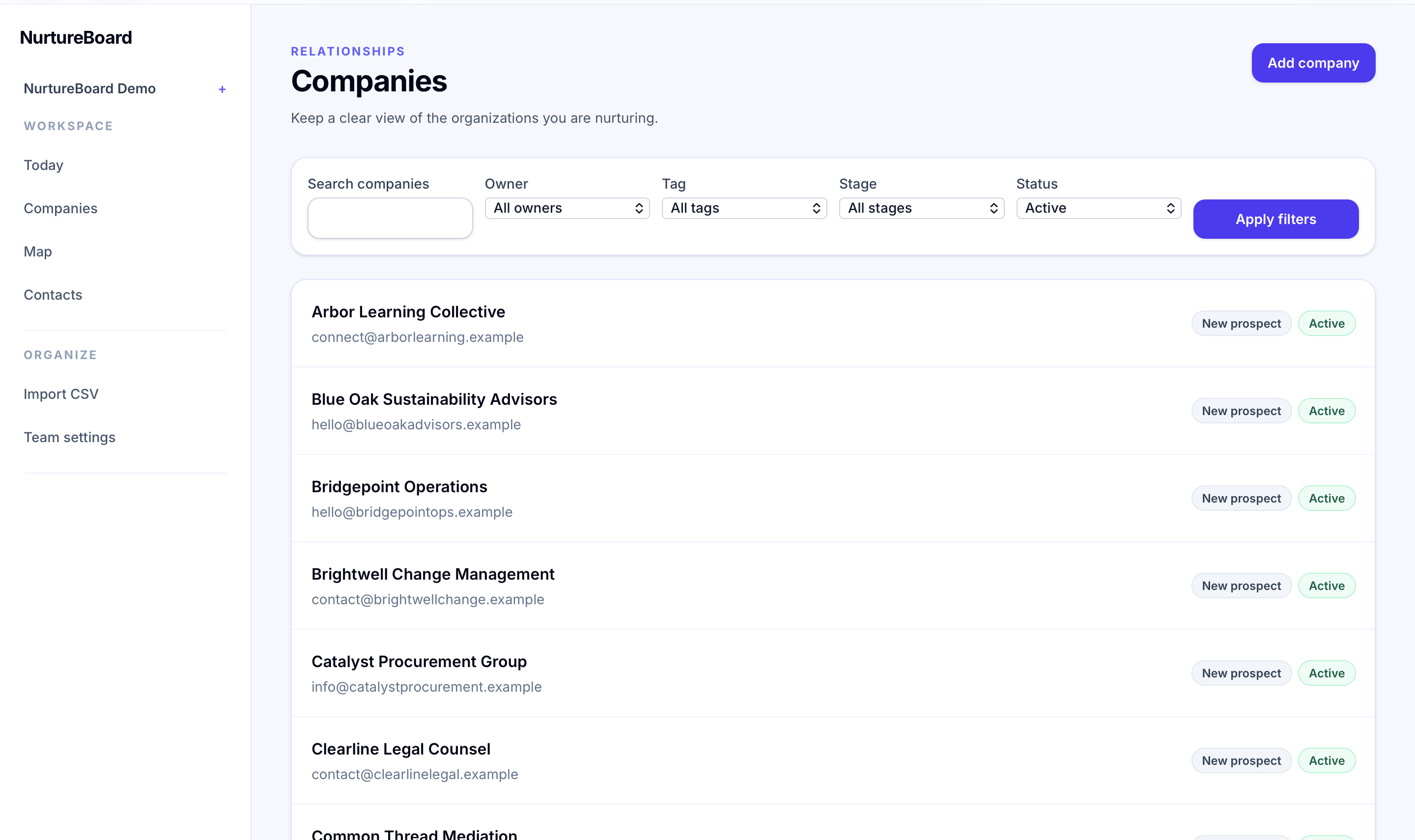
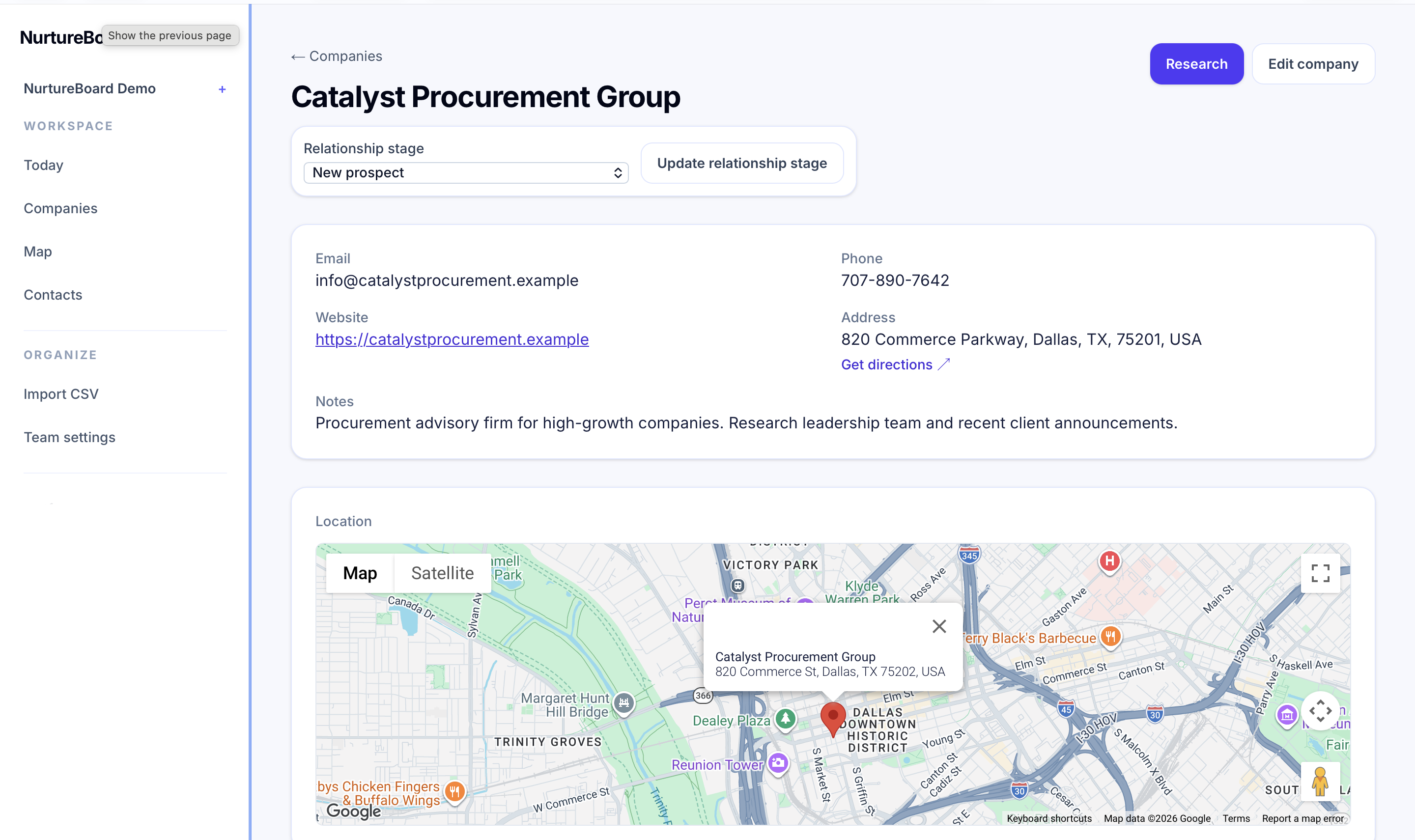
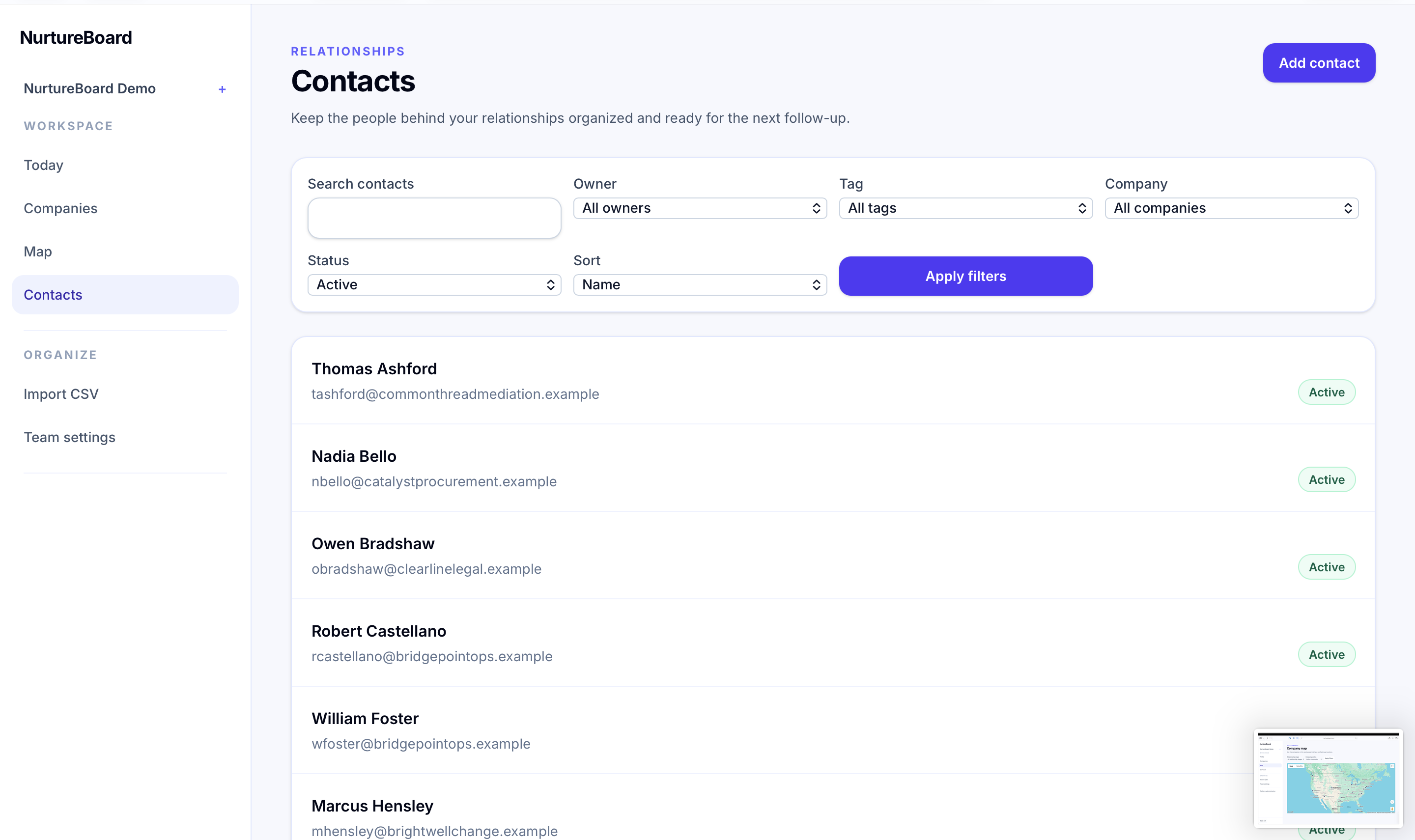
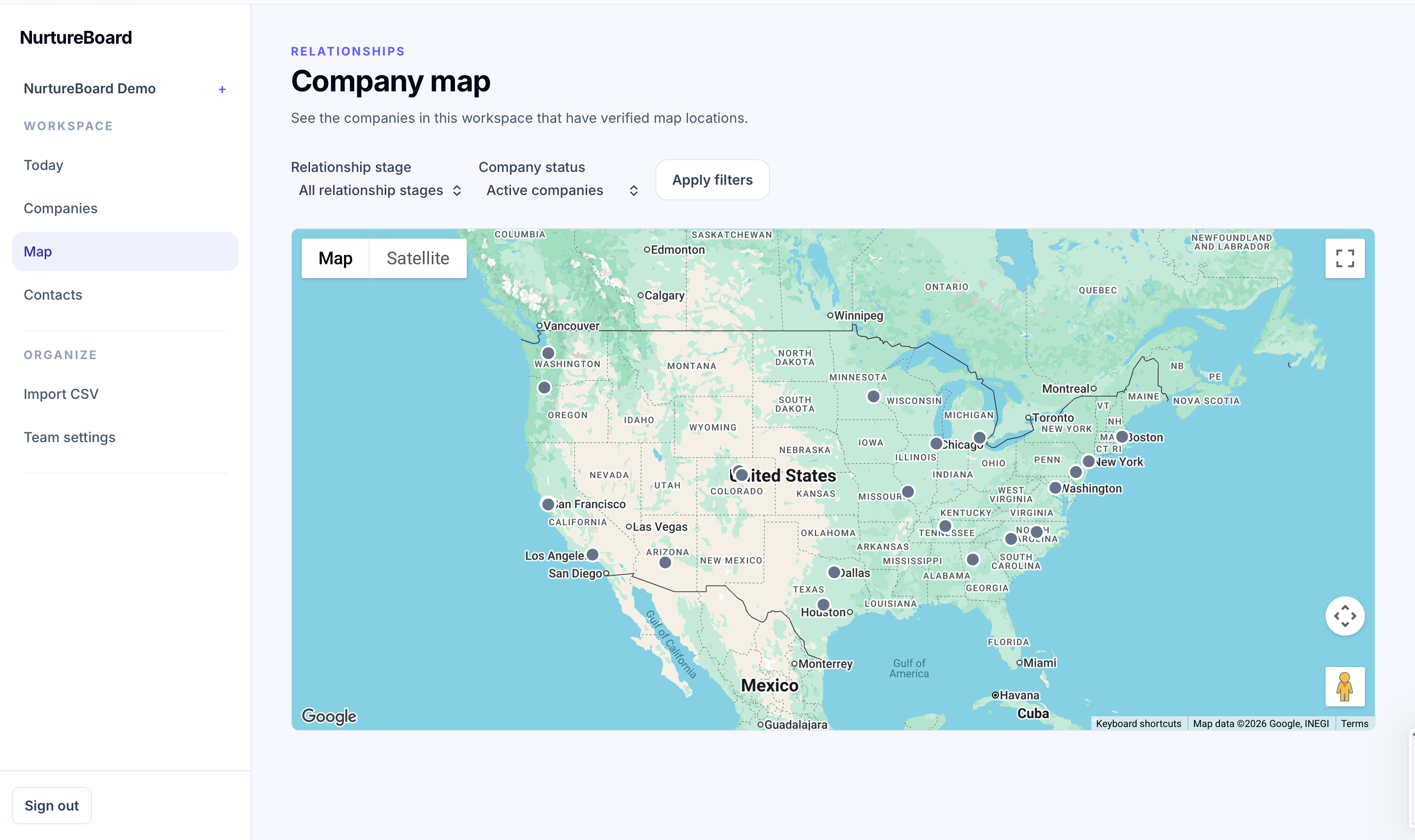
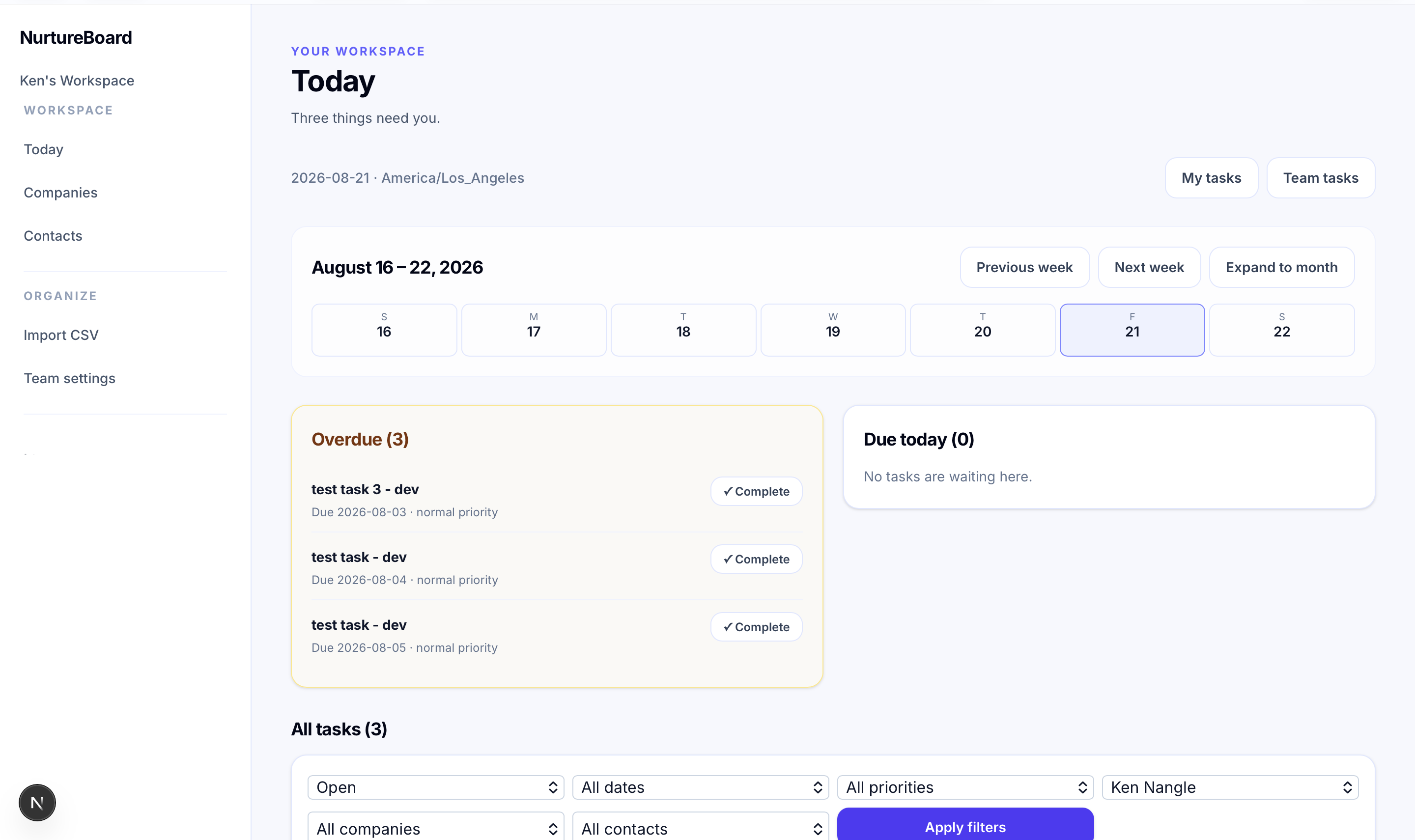
A relationship CRM I built and run in production: companies, contacts, follow-ups, relationship stages, and mapped locations.
Built in-house · Multi-tenant SaaS
NurtureBoard
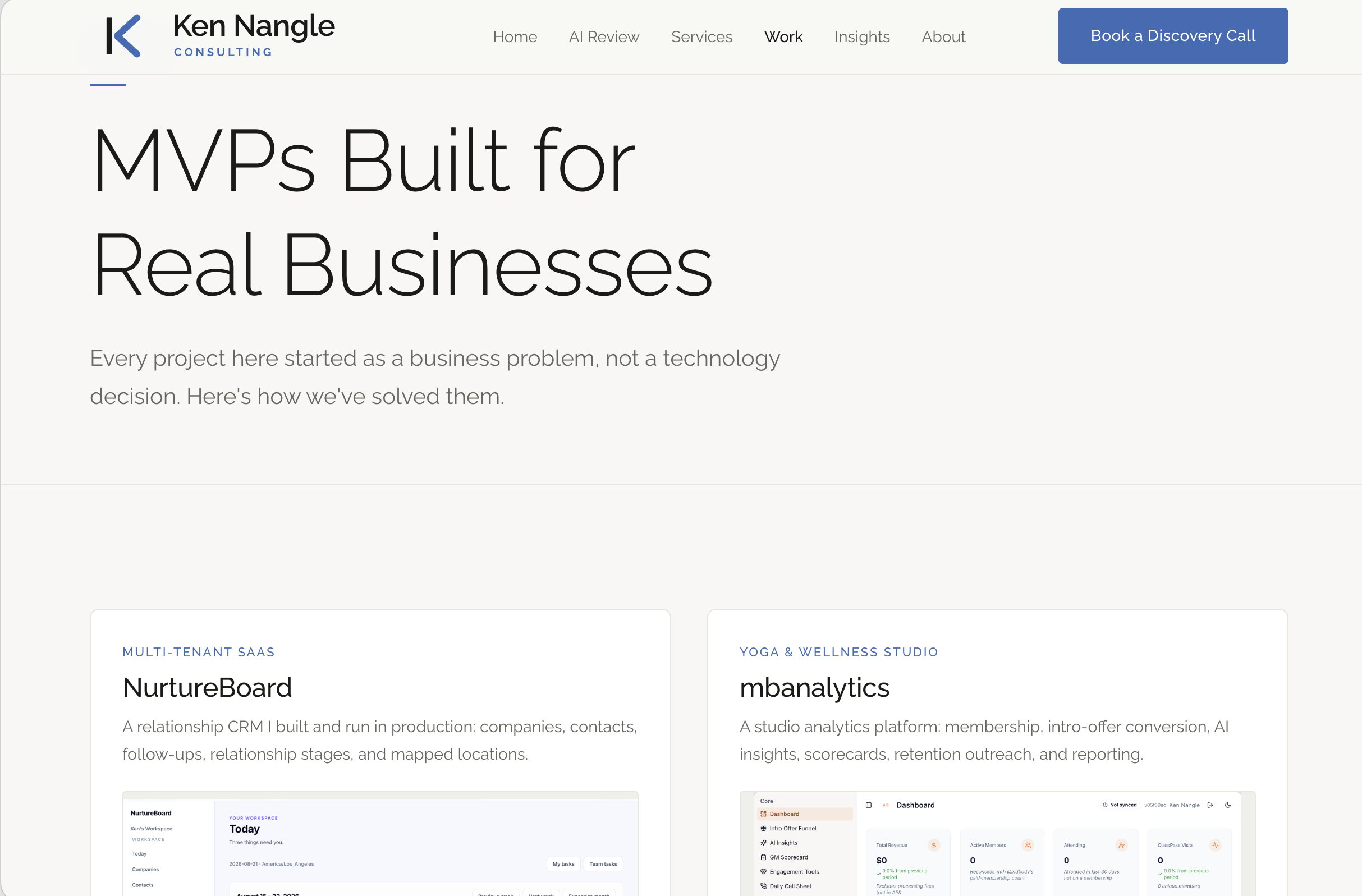
Most of my work is helping owners decide what's worth doing — and often the honest answer is that nothing needs building at all. But when something does, I build it myself. These are systems running in production, so you can judge the claim rather than take it.
A relationship CRM I built and run in production: companies, contacts, follow-ups, relationship stages, and mapped locations.
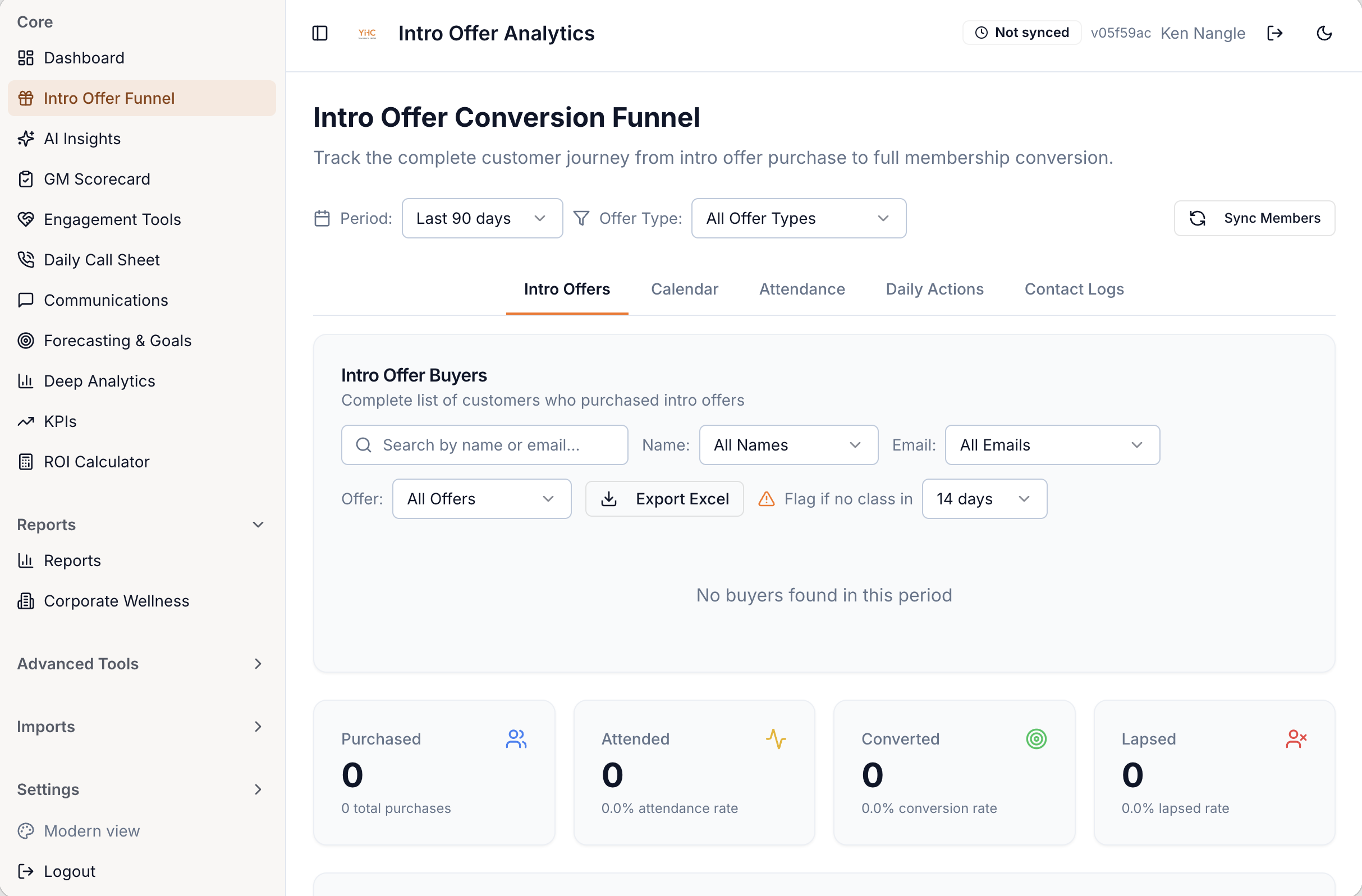
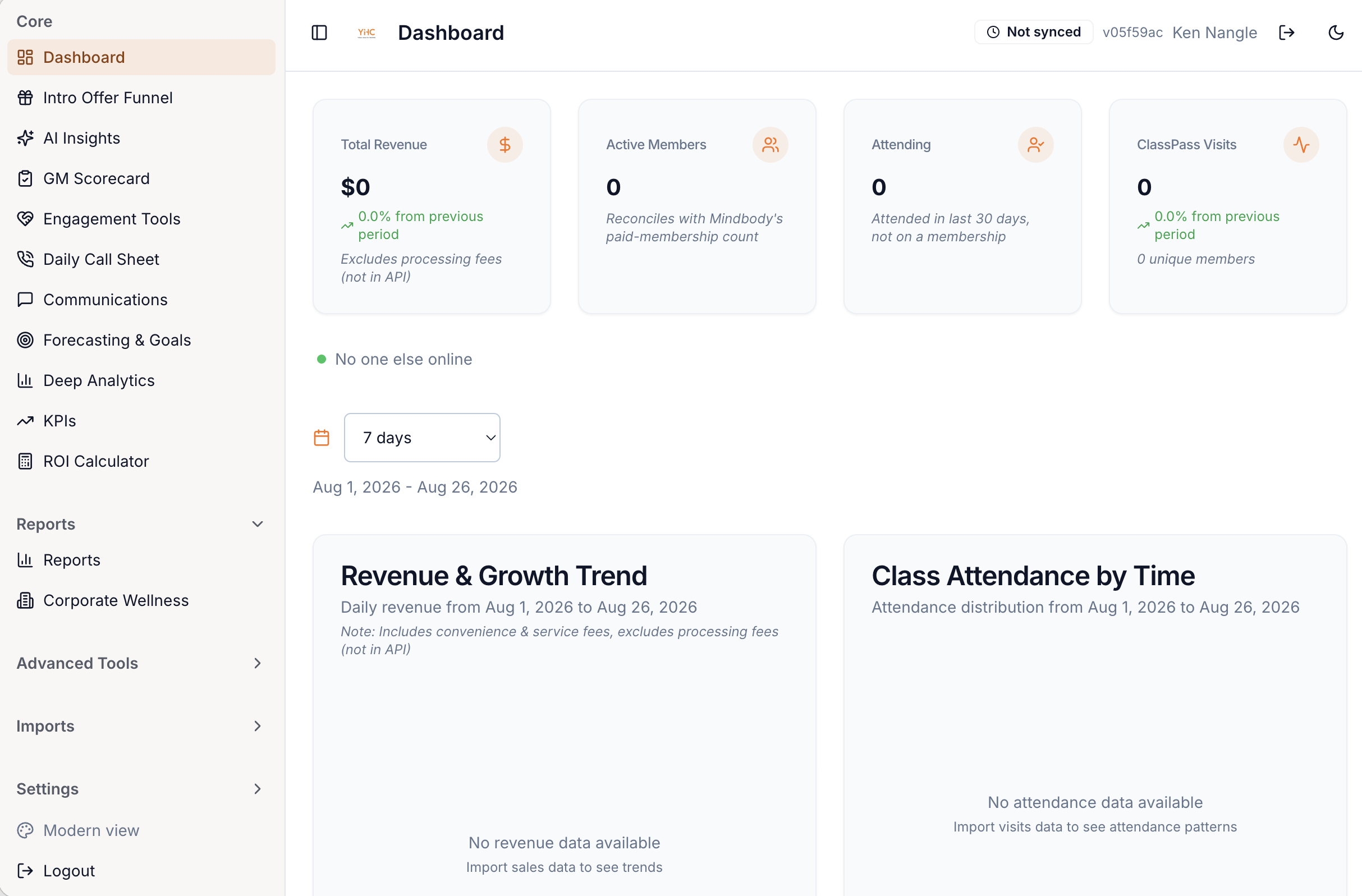
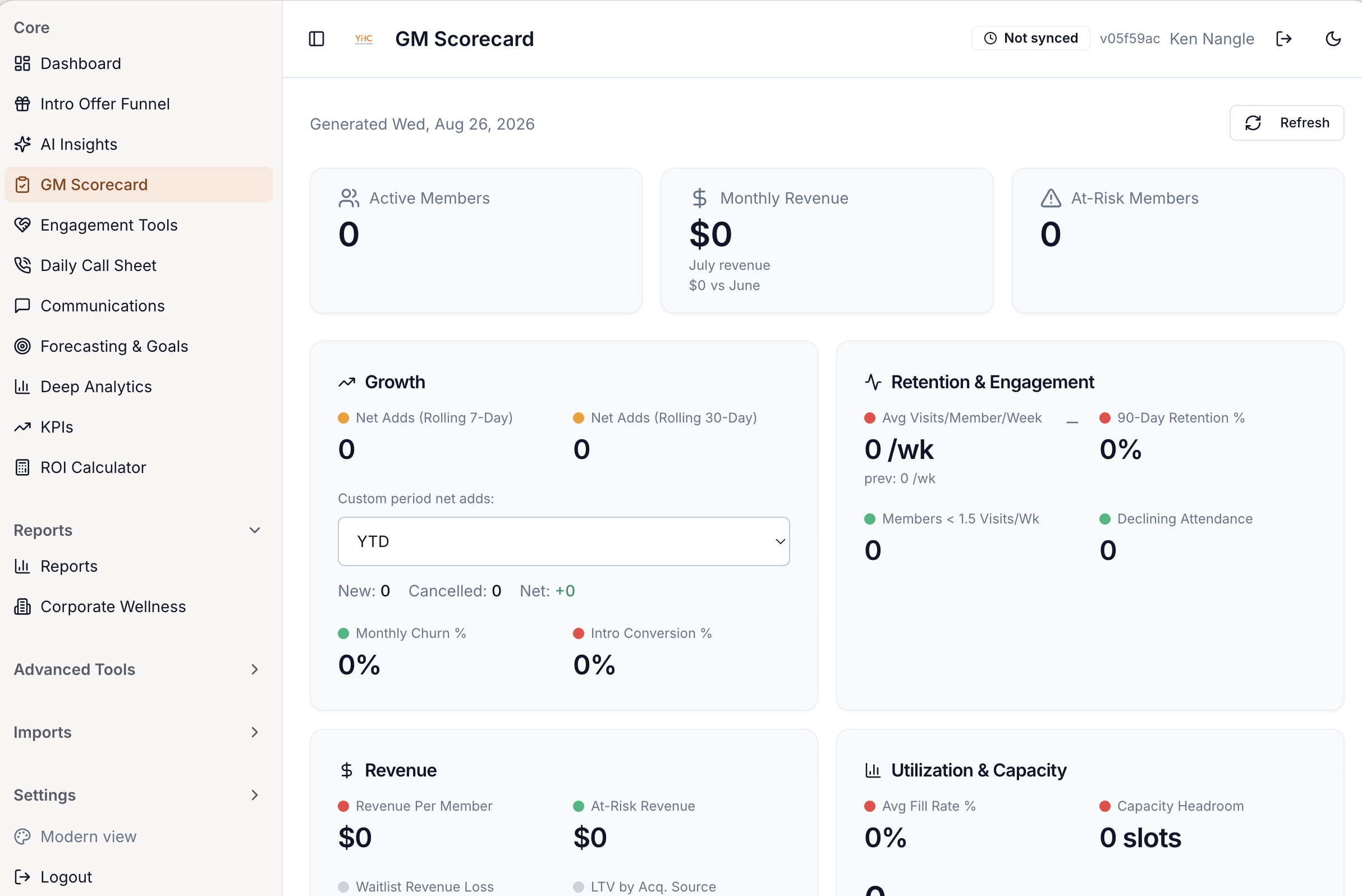
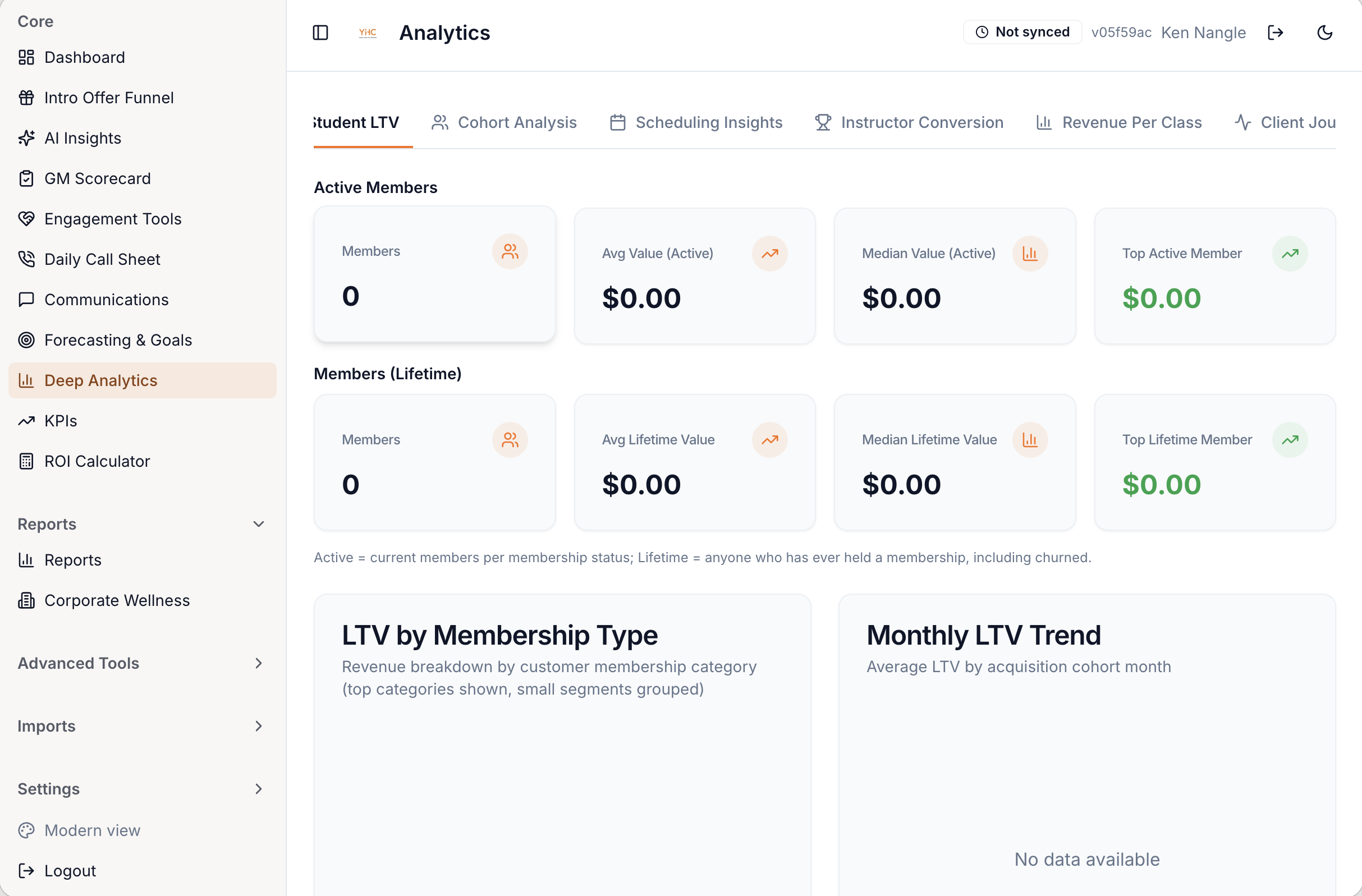
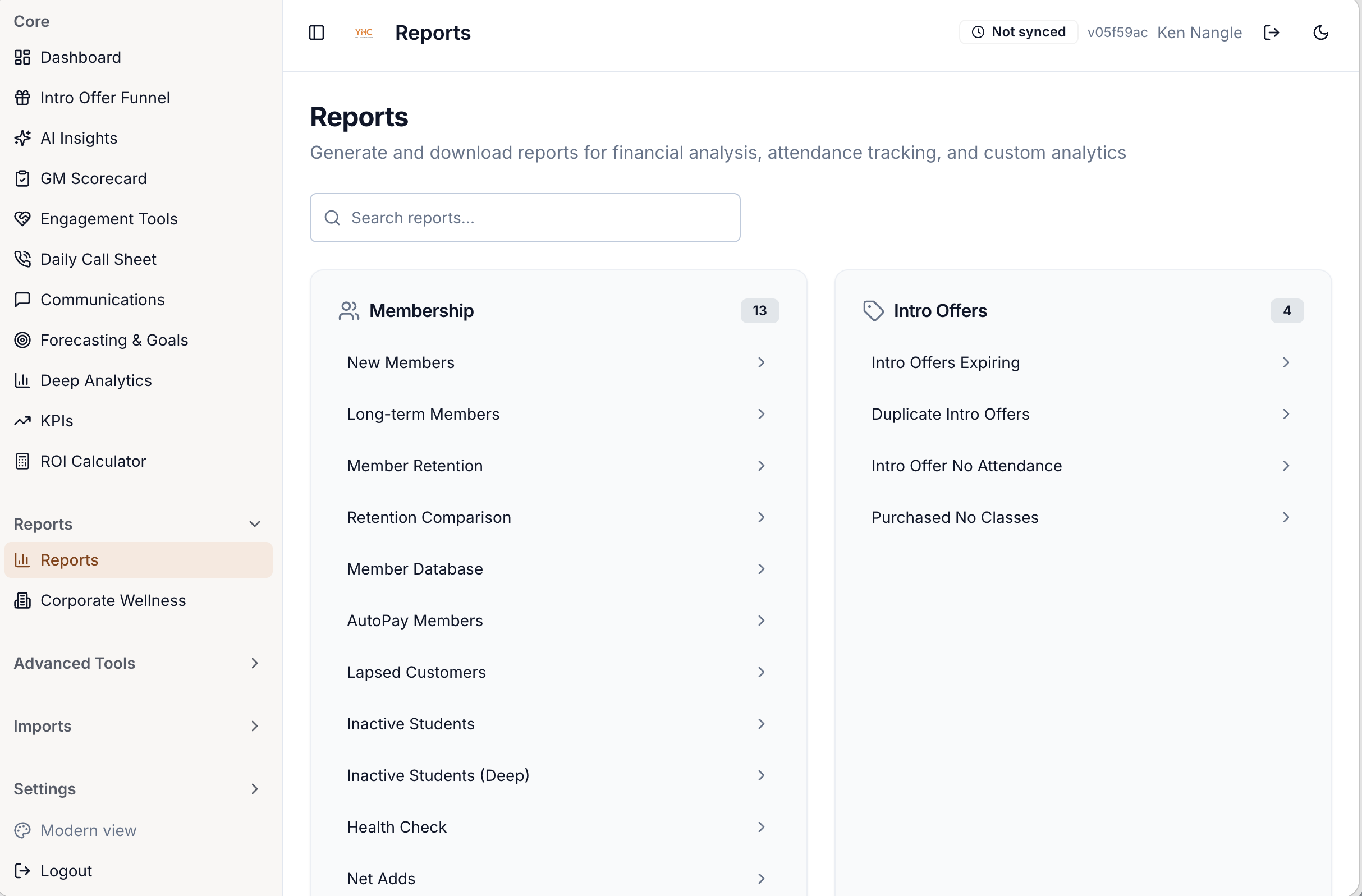
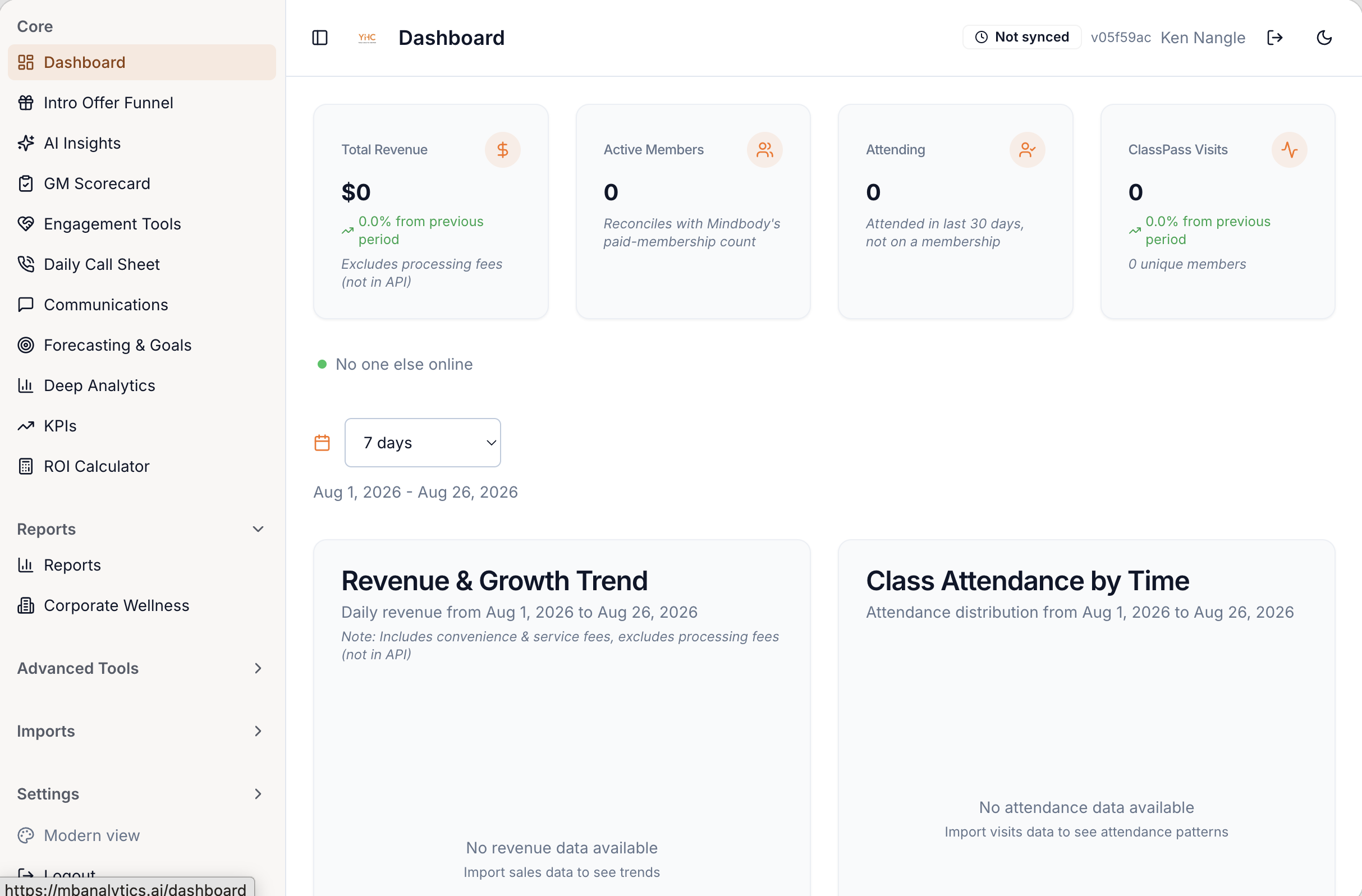
A studio analytics platform: membership, intro-offer conversion, AI insights, scorecards, retention outreach, and reporting.
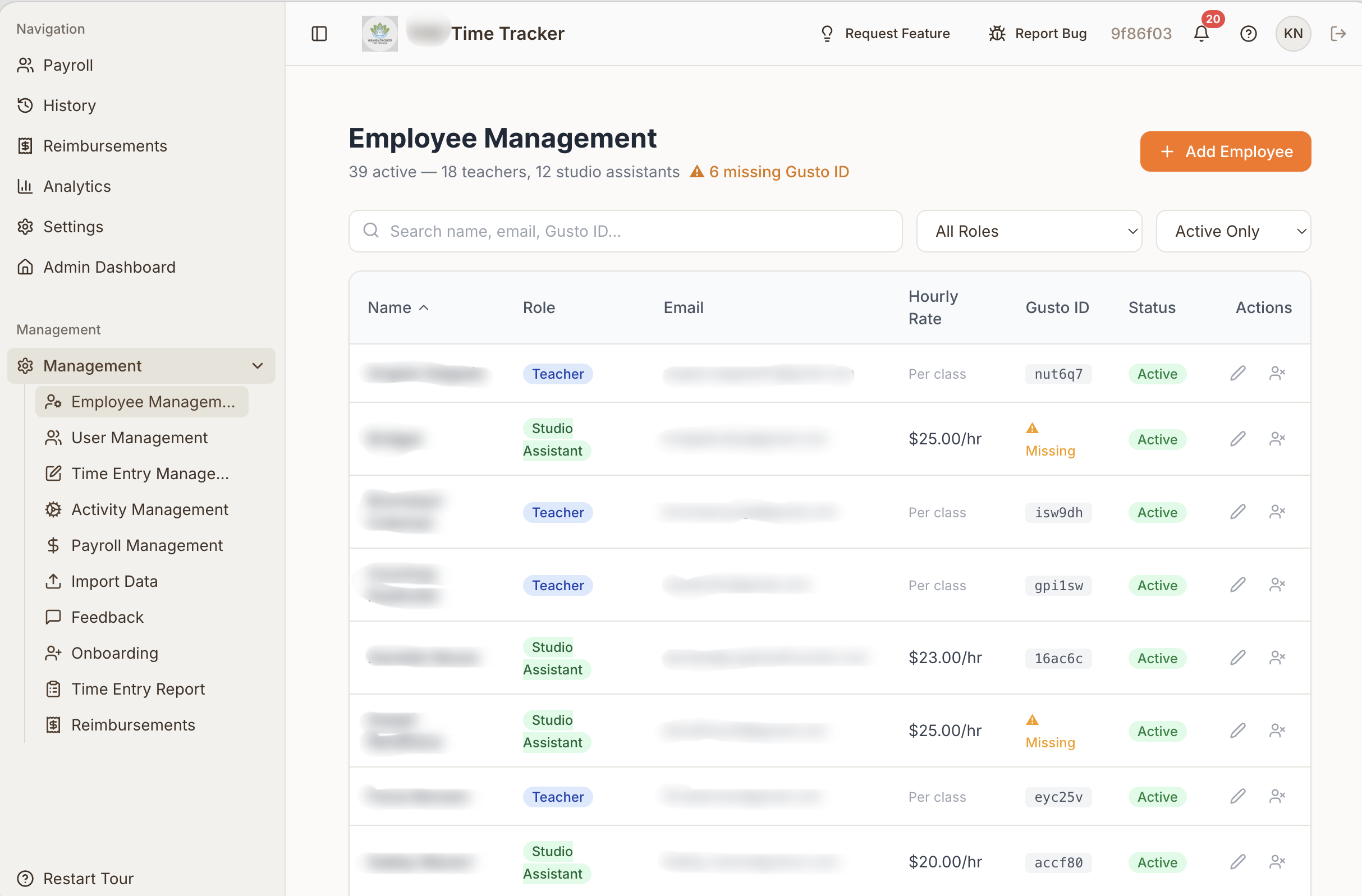
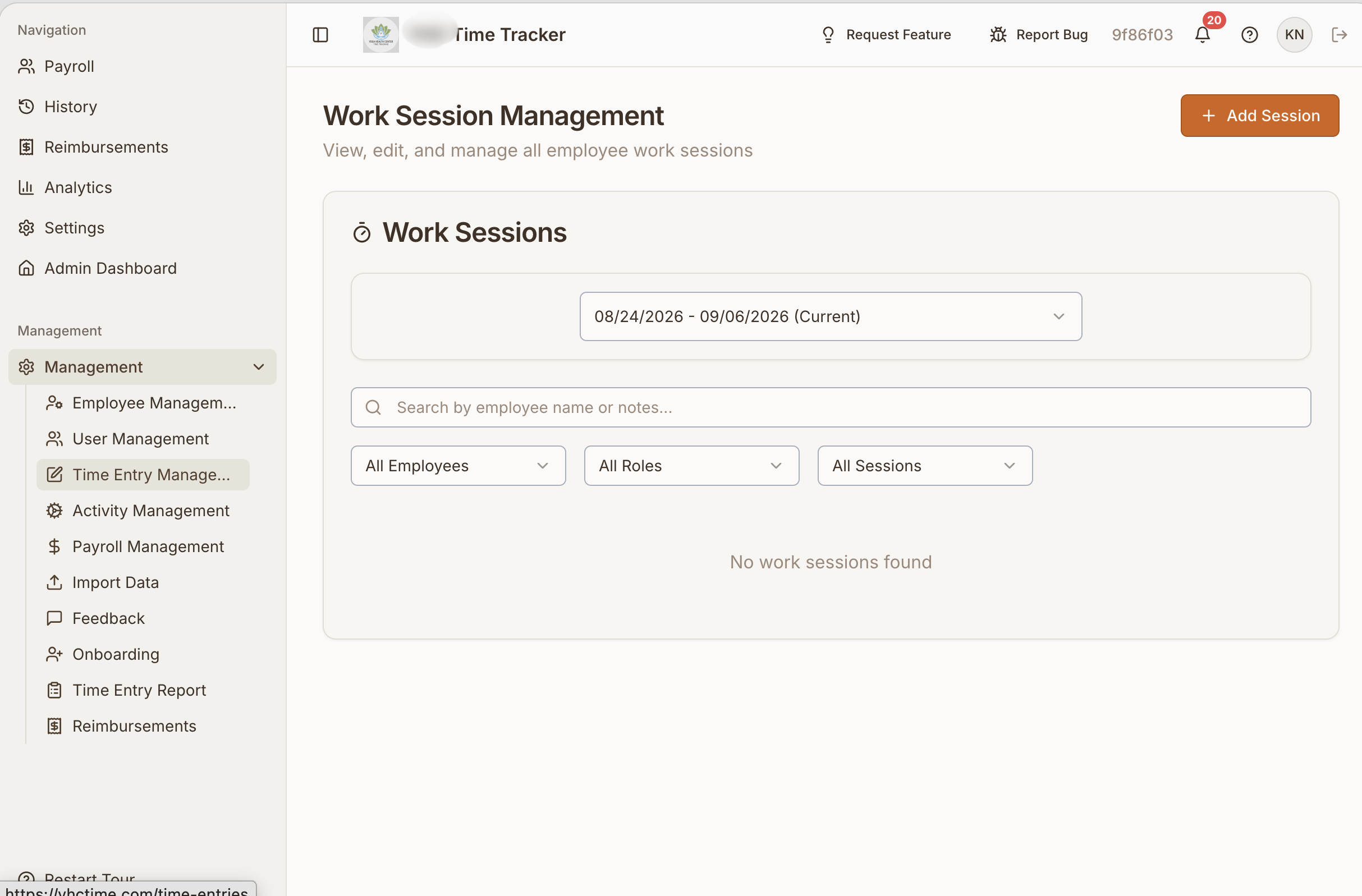
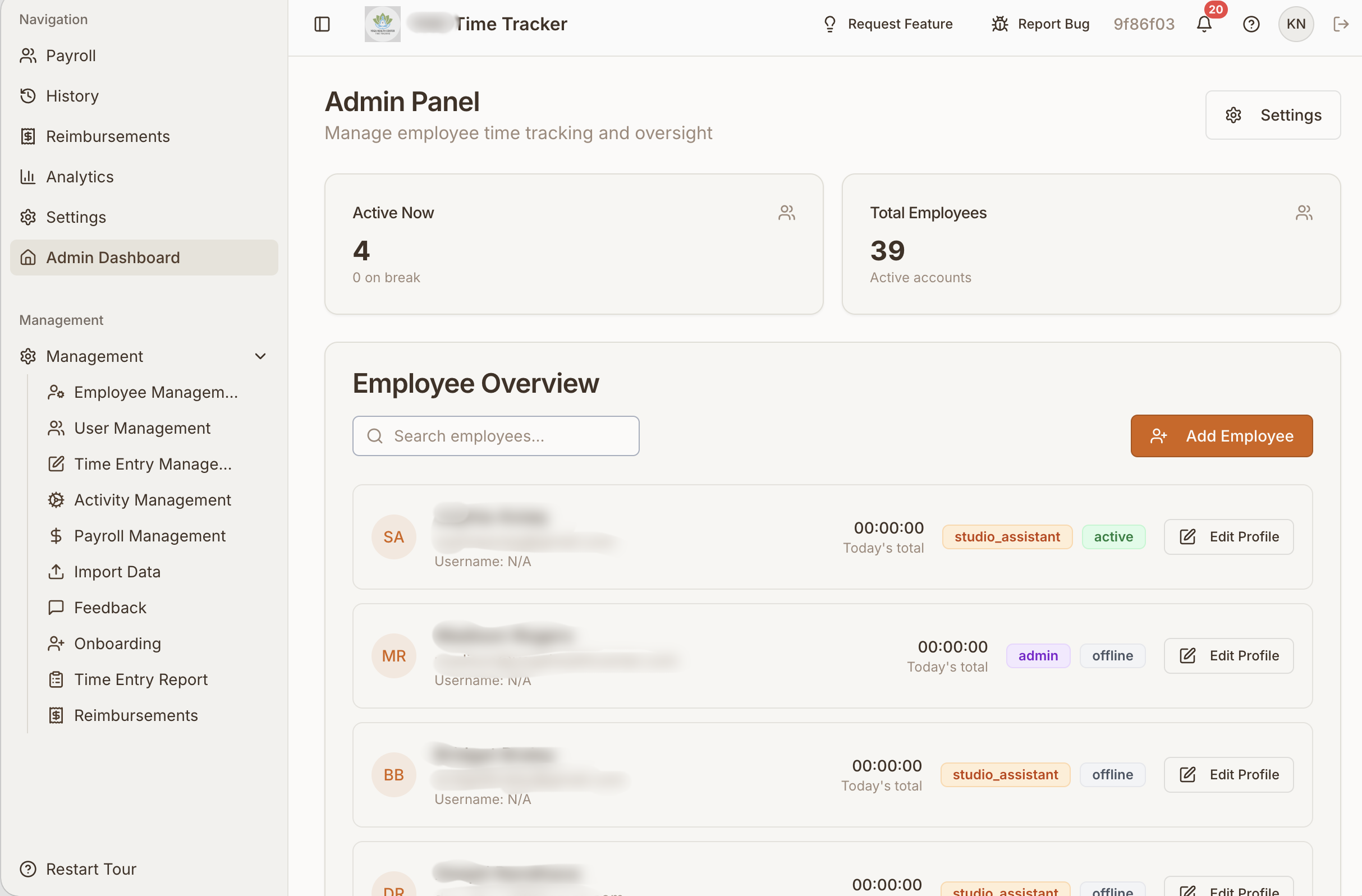
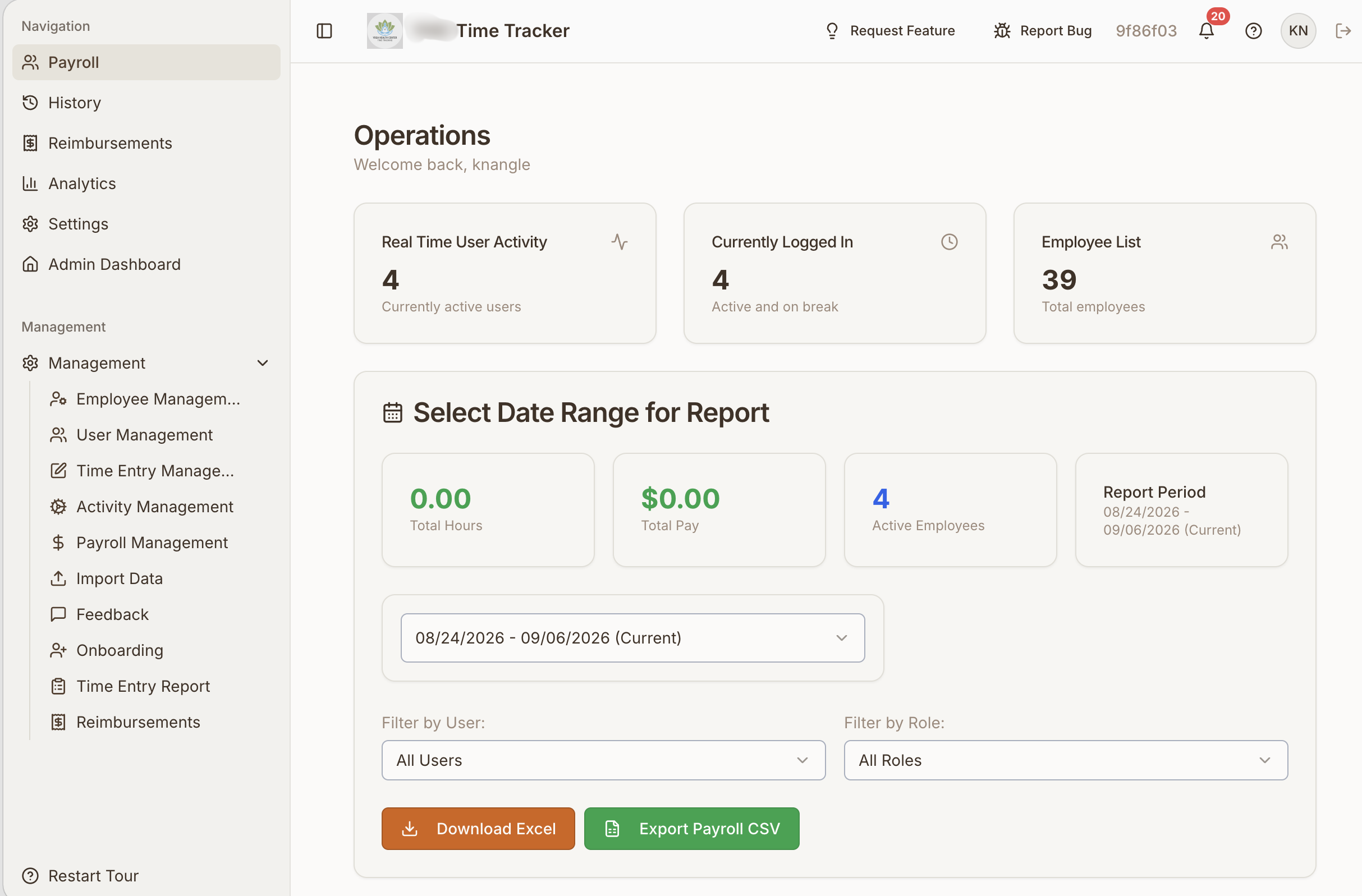
Employee time tracking, work sessions, payroll, and administration.
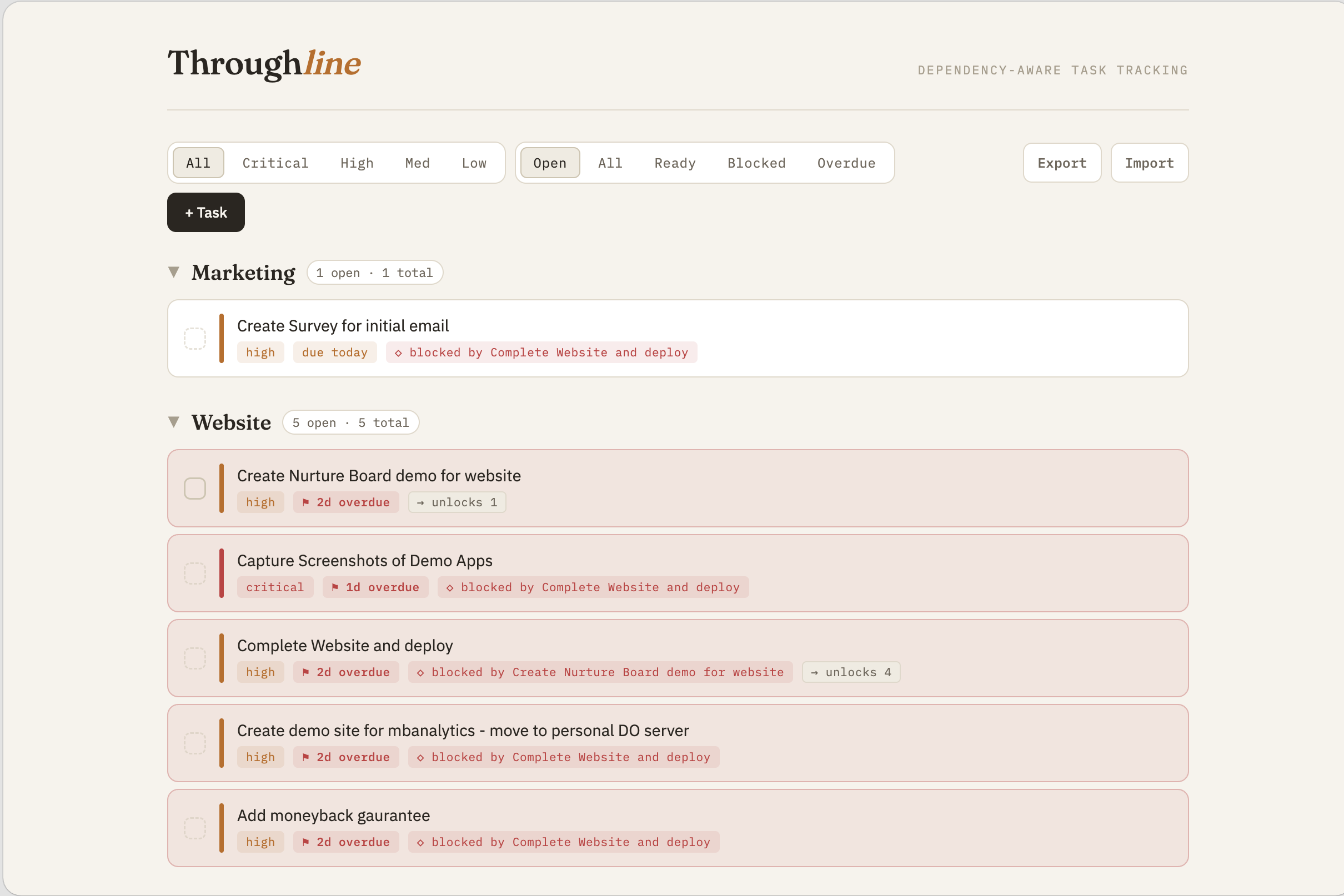
A dependency-aware task manager that surfaces what's blocked and what's ready to start.
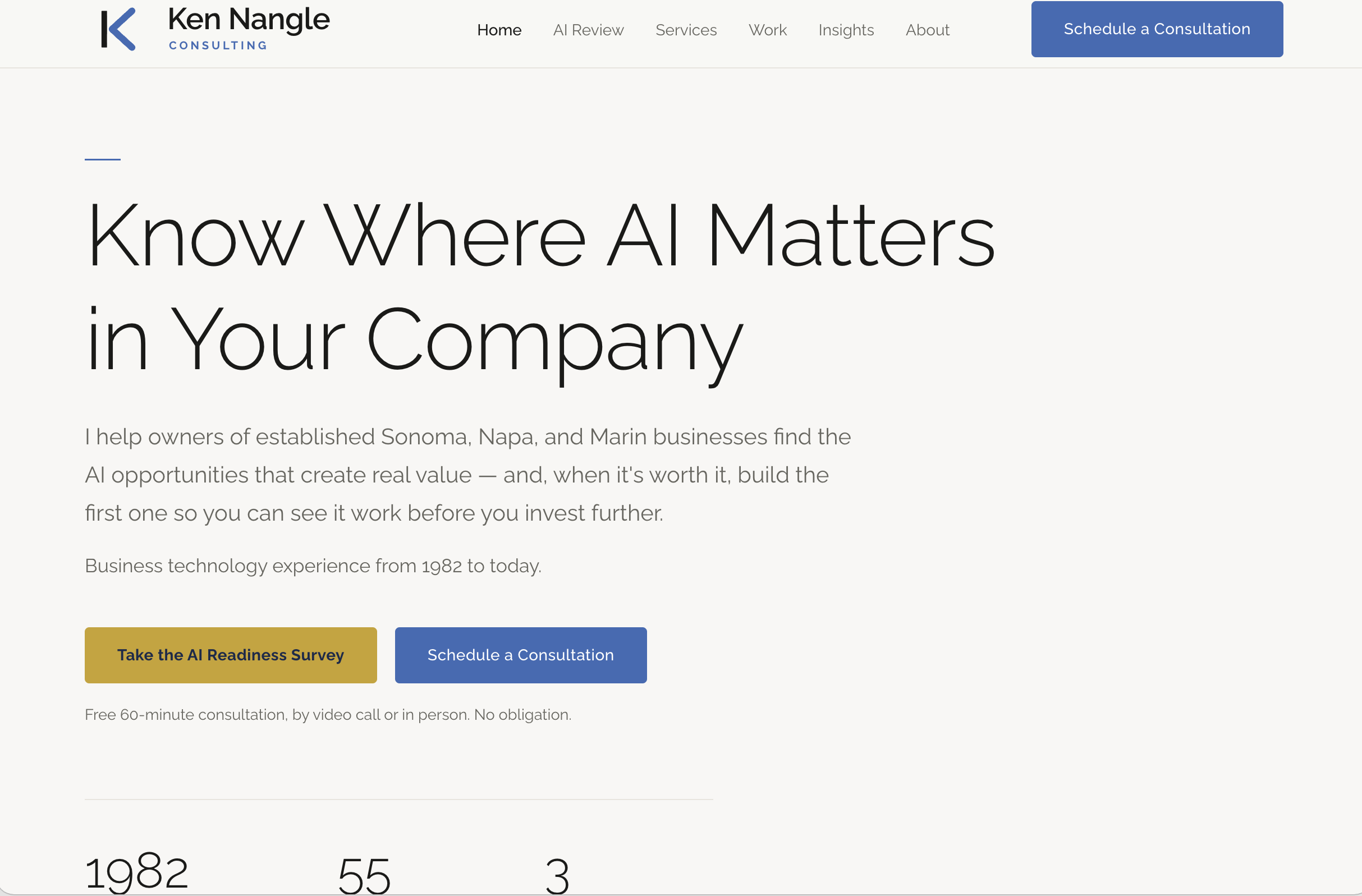
This site itself: built with Astro and maintained end to end in-house.
Not a screenshot — the real tool. Enter a zip code and a business type and get a read on your local competitive landscape in about 60 seconds. This is a proof of concept rather than a full market research product: it searches Google Places and nothing else, so it sees businesses that keep a Google listing — most of them, but not all.
NurtureBoard is a calm, focused workspace for organizing relationships and following through — but it's really a platform for building customized relationship-management systems. I built it in-house and run it in production, using the same approach I bring to client work. Use it as-is, shape it to how your business actually tracks relationships, or integrate it with the systems you already run.
None of these started as a technology decision. Each one started with a business problem worth solving, and the software followed.
These pull from the systems already in place rather than replacing them. The problem is usually that your systems don't talk to each other — not that anything is missing.
Each was built to answer a question first. You find out whether it earns its place before anyone commits to the larger version.
What the work was supposed to improve gets agreed before it ships, not described afterward. Otherwise you can't tell whether it worked.
Client systems ship with documentation and no ongoing licence. No proprietary platform, and no dependency on me once it's running.